Scaling Product Through a Design System
Scaled a fragmented product experience into a cohesive, multi-platform system that improved delivery speed, consistency, and usability across teams.
Role
Lead Product Designer / Design Systems
Scope
Foundation, Components, Documentation, Governance
Team
3 designers, 4 engineers, 1 product manager
Timeframe
18 months (2024–2025)
The Challenge
Product teams were moving fast, but consistency was falling apart.
As the product expanded across web, mobile, and desktop surfaces, different teams were solving the same problems in different ways. Design-to-dev handoff required constant clarification. New features took longer to ship because every component needed to be designed and built from scratch. There was no shared language.
“Every new feature felt like starting over.”
Context & Complexity
The challenge wasn't just creating components—it was building a system that could serve multiple product surfaces, respect existing technical constraints, and scale with a growing organization.
3 platform surfaces (web, iOS, Android) with different technical stacks
12 product teams working in parallel across time zones
Legacy codebase with 4+ years of accumulated design debt
No existing token foundation or naming conventions
Approach
Audit & Foundation
Conducted a comprehensive audit of existing patterns across all surfaces. Established a token architecture (color, typography, spacing) that could flex across platforms while maintaining brand consistency.
Component Model
Built a tiered component library starting with foundational primitives, then composition patterns, then complex workflows. Each component included accessibility specs, implementation guidance, and usage examples.
Documentation as Product
Treated documentation as a first-class product deliverable. Created interactive examples, migration guides, and decision trees to help teams self-serve.
Governance & Adoption
Established a contribution model with clear review processes. Partnered with engineering leads to embed the system into sprint workflows. Tracked adoption metrics to identify friction points.
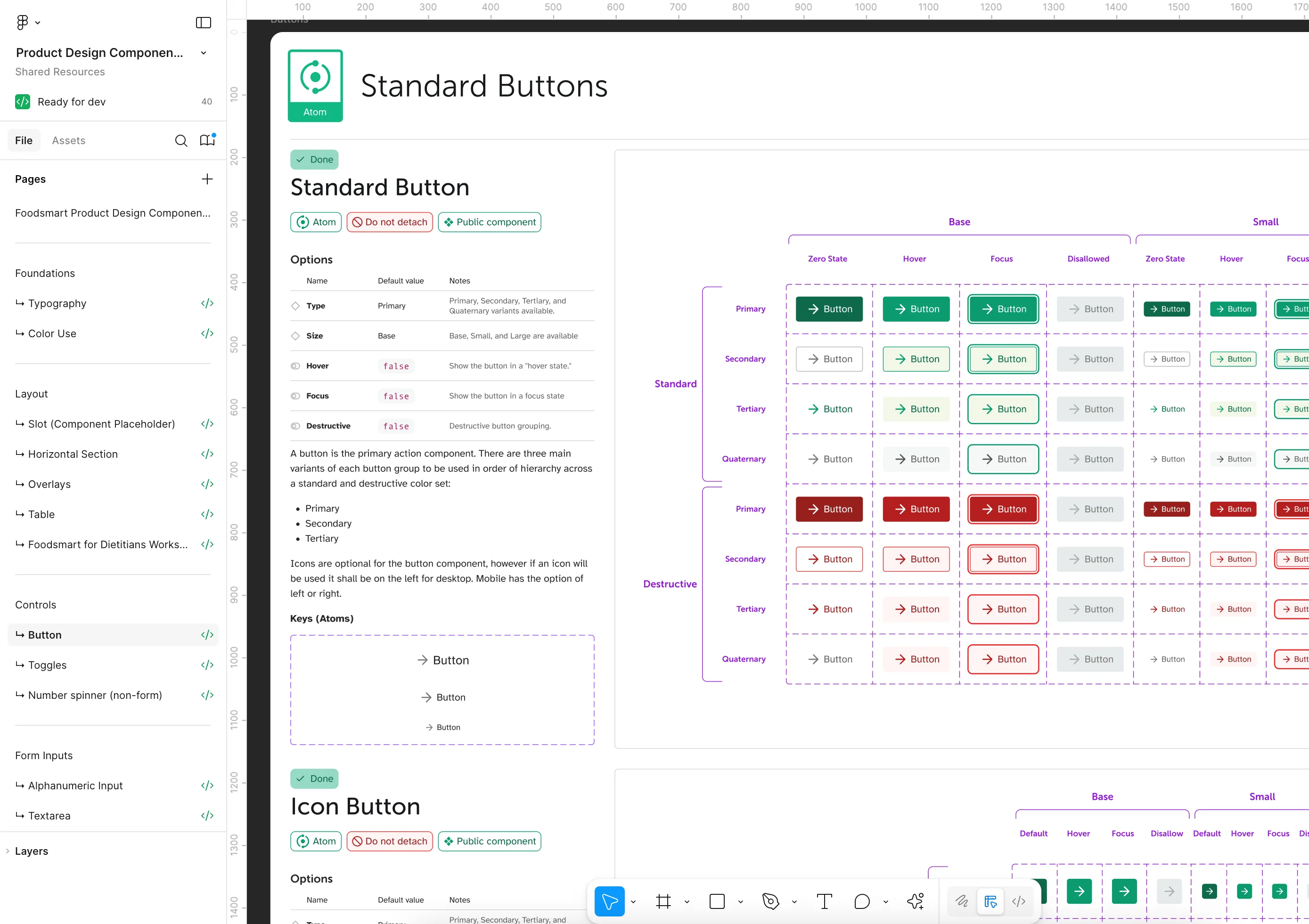
Component Library
Core component library showing foundational primitives and composition patterns
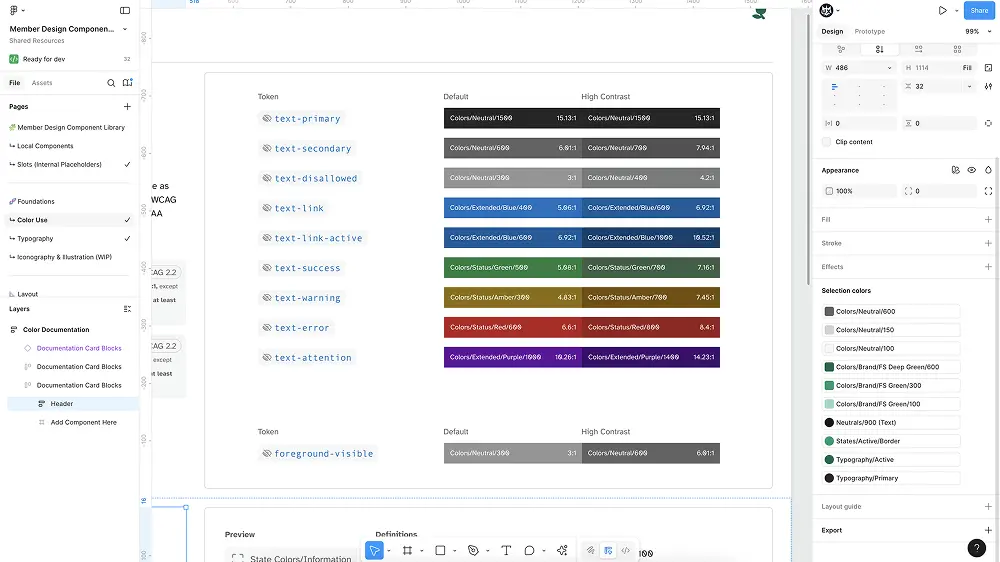
Token Documentation
Design token architecture with semantic naming and platform-specific implementations
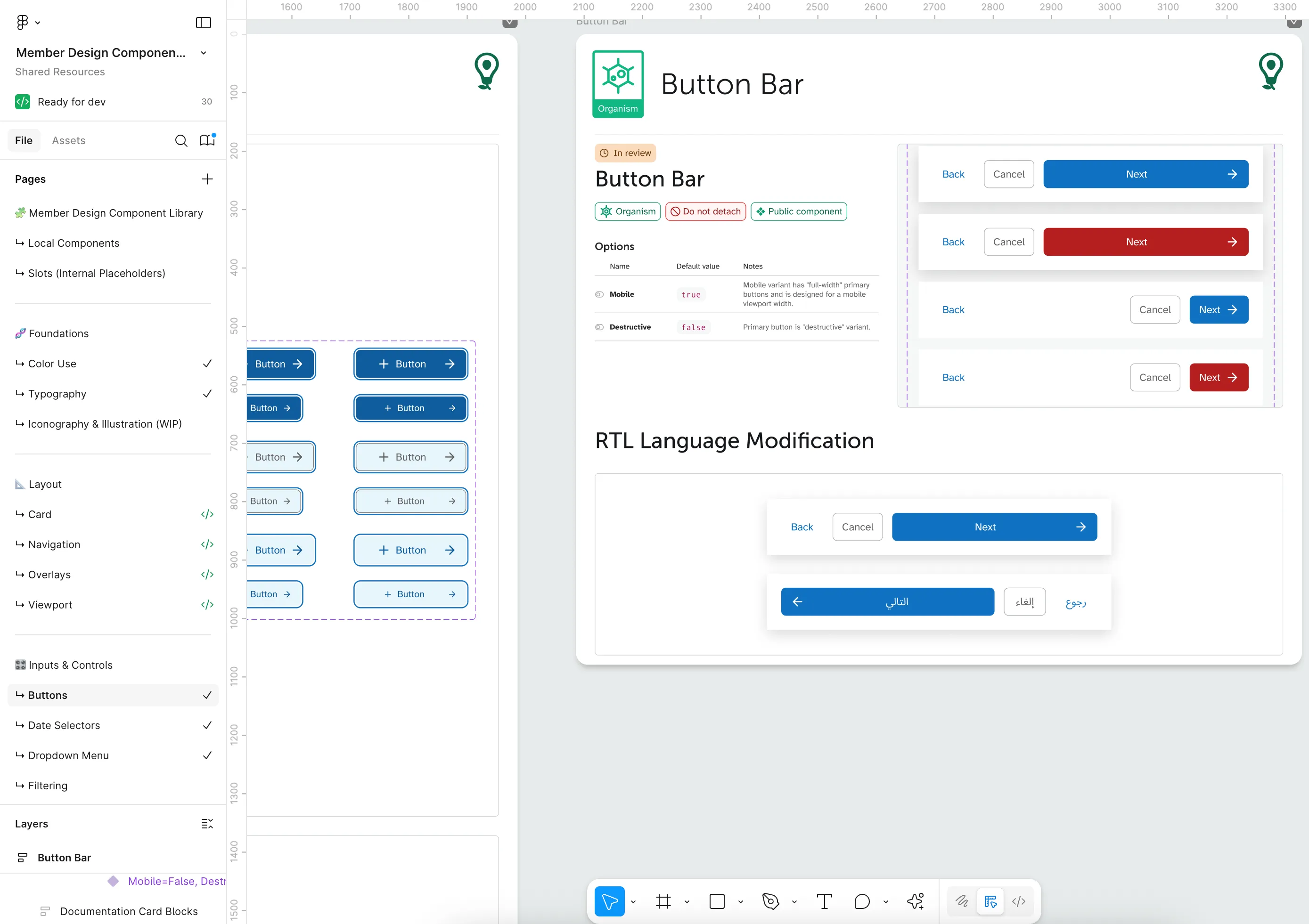
System Architecture
Multi-platform architecture showing token distribution and component inheritance
Outcomes
60% faster design-to-dev handoff
Teams using system components reduced handoff time from days to hours. Engineers could self-serve implementation details from documentation.
94% adoption across product teams
Within 12 months, all active product teams had migrated to the system. New features shipped using system components by default.
Consistent cross-platform experience
Users now encounter familiar patterns across web, mobile, and desktop. Visual inconsistencies dropped by 85%.
Foundation for scale
System enabled the organization to ship 3 new product surfaces without requiring proportional design resources.
What mattered most
The hardest part wasn't the design work—it was the organizational change. Getting teams to trust a shared system required patience, clear communication, and a willingness to iterate based on real feedback. What mattered most was treating the system as a service, not a mandate. We built trust by solving real problems, not by imposing process.
Next Case Study